There’s a small moment that happens thousands of times on websites every day. Someone arrives knowing roughly what they want. They spot the search bar, type a few words — often not the words you expect — and hit enter.
What happens in the next two seconds decides whether that person becomes a customer or a closed tab.
Yet while teams spend hours refining navigation menus, hero sections, and page layouts, the search bar is often treated as an afterthought. It gets set up once, connected to the platform’s default search, and rarely questioned again.
The problem is simple: people do not search the way websites are built.
People Search With Their Problem, Not Your Product

Here’s the core mismatch. When you build a website, you organise it around how you understand your business. Your products have names. Your services have categories. Your content sits in neat sections that make sense from the inside.
Visitors don’t have any of that context. They arrive with a problem, a half-formed question, or a vague memory of something they saw. So they type what’s in their head — which is almost never the official term sitting on your page.
A visitor doesn’t search “thermal regulation apparel.” They type “shirt that keeps me cool.” They don’t search “subscription cancellation policy.” They type “how do I stop being charged.” They don’t search “compatibility requirements.” They type “will this work on my phone.”
Same intent. Completely different words. And a search bar built to match exact terms sees no connection between the two.
This is the part teams consistently underestimate: the gap isn’t caused by bad content or a bad product. It’s caused by the simple fact that humans describe things in their own language, and most search tools only understand the website’s language.
Real Search Behaviour Is Messier Than Any Design Assumes
If you watched a hundred people use your site search, you’d notice patterns that almost never make it into the original design brief.
People type incomplete thoughts. They search three words, not a full query. They abandon the first attempt and try again with different words — or they don’t try again at all. They make typos and expect the site to cope. They phrase things as questions. They use slang, abbreviations, and the name of a competitor’s product because that’s the term they happen to know.
They’re also impatient in a very specific way. A visitor who searches has higher intent than someone casually browsing — they came looking for something particular. But that same intent makes them less forgiving. A browser will wander. A searcher who hits a wall leaves, because the search bar was supposed to be the shortcut, and the shortcut failed.
The same behavioural shift is reshaping search beyond the website itself, as users increasingly turn to conversational queries and AI-generated answers instead of traditional keyword searches. We explore this further in how AI is reshaping SEO in Singapore.
The cruel irony is that your most motivated visitors are the ones most likely to be let down by search — and the least likely to tell you about it.
Why This Gap Is So Easy to Miss
Most teams never see this happening, for a few reasons.
The first is that nobody complains. A confusing checkout generates support tickets. A broken search bar generates silence and a back button. The failure is invisible because the evidence walks out the door.
The second is that the people who build and test the site are the worst possible judges of its search. They already know the right words. They know the product is called “Aurora” and the policy is under “Account.” They type the insider term, get the right result, and conclude search works fine. It works fine for them. It was never built for them.
The third is that search quality rarely shows up on the dashboards teams actually watch. Bounce rate, sessions, conversions — those get tracked. What people typed into the search box, how often it returned nothing, and how many of those people left immediately afterwards usually go unrecorded entirely. (That blind spot is worth a whole article of its own — and it gets one.)
Designing for How People Actually Search

Almost everyone who runs this exercise for the first time has the same reaction — a slightly uncomfortable realisation that their visitors have been speaking a different language all along, politely, into a box that wasn’t listening.
That discomfort is worth sitting with. It means you’ve found something real, and something fixable. The harder question isn’t whether the gap exists on your site — it almost certainly does. It’s how much it’s quietly costing you. And that’s a number most teams have never thought to measure — though it’s exactly the kind of problem the team at WhooshPro spends its time solving.
Search Is Not Just a Feature. It Is a Signal.
A website search bar may look like a small part of the interface, but it reveals something much bigger: how well your website understands the people using it.
When search fails, it is rarely because visitors are asking for the wrong thing. More often, it is because the website is only prepared to answer in its own language. The content may exist. The product may be right. The answer may already be somewhere on the site. But if the search experience cannot connect human intent to the right result, the journey breaks before it has a chance to continue.
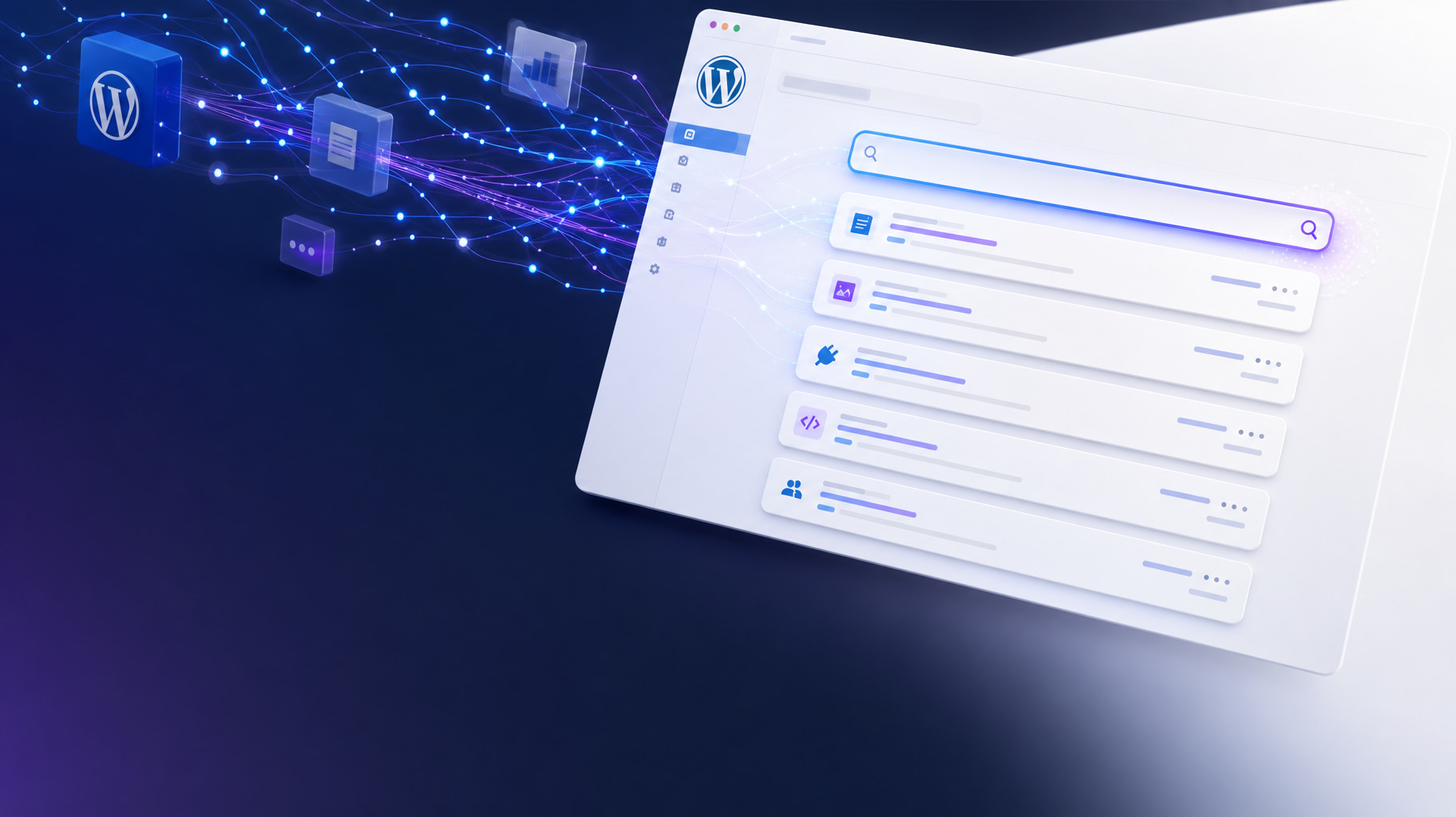
This is where intent-aware search can make a difference. Instead of relying only on exact keyword matches, tools like Breezy AI Search can interpret natural-language queries and help visitors find relevant content even when they do not use the website’s exact terminology.
At WhooshPro, this is exactly the kind of problem we help businesses solve — by building smarter digital experiences that make it easier for users to find what they need, in the way they naturally ask for it.
Because good search does more than return results. It listens.