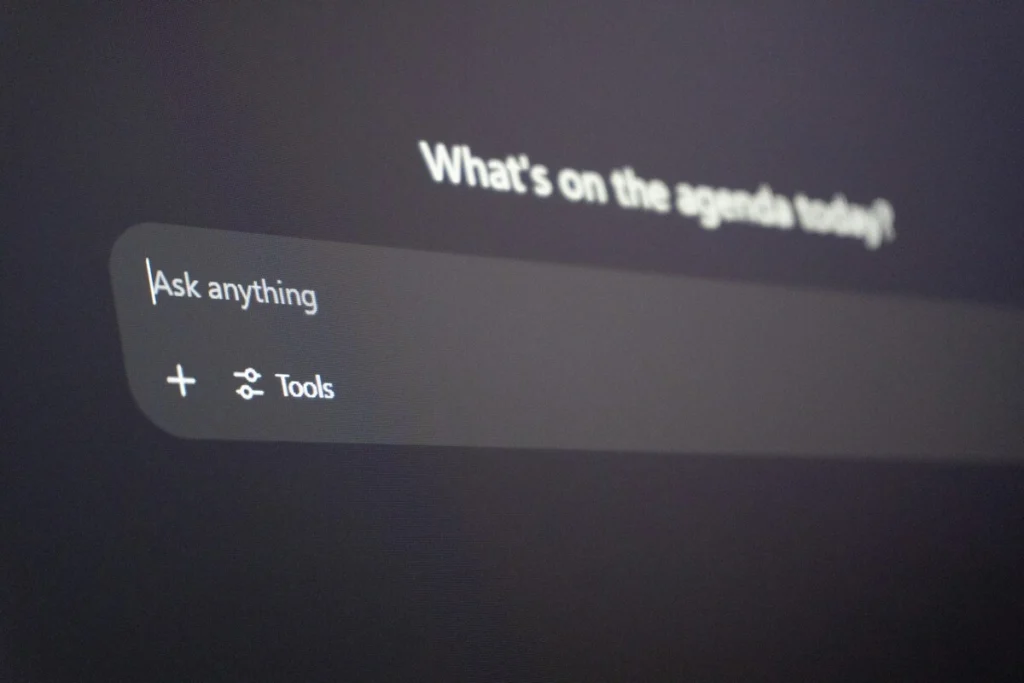
Three years ago, your customer typed “best coffee machine Singapore” and clicked through to a few sites to compare. Today, they open ChatGPT, ask a 40-word question about their exact situation, and form an opinion about your entire category — often before they visit a single website.
For a growing share of Singapore brands, the most important part of the buying decision now happens somewhere you can’t see, measure, or influence with traditional SEO. This is why AI search optimisation is becoming an increasingly important part of SEO, as customers discover brands through AI-generated answers as well as traditional search results.
We spend enormous energy on how our websites look, rank, and convert. But the first surface most customers now encounter isn’t our homepage or even a Google results page — it’s an AI answer that may or may not mention us at all. And most brands have no idea what that answer says.
And when visitors do reach your website, that expectation does not disappear. They are increasingly used to asking a question and getting a direct answer. Breezy AI Search brings that same conversational experience directly to your website, helping visitors find answers from your existing content.
The Shift: From Search Engines to Answer Engines
A few benchmarks worth grounding this on, drawn from 2025–2026 industry research:
- Singapore sits in the global top 5 for generative AI adoption, at 53–61% of the working population — alongside the UAE, India, and Norway (Microsoft and Tortoise AI Index, 2025)
- Google AI Overviews now appear in roughly 20–25% of Google searches in Singapore, up from 6.49% in January 2025 (Conductor 2026 Benchmarks)
- Zero-click searches — where users get their answer without clicking a result — now sit at around 60% globally, and trend higher in markets with high digital literacy like Singapore (Semrush, 2025)
- ChatGPT processes 2.5 billion queries per day and reaches 900 million weekly active users (Backlinko, 2026)
- AI search traffic converts at 14.2%, compared to Google’s 2.8% — roughly 5x higher conversion intent (Exposure Ninja, 2026)
- Gartner forecasts traditional search volume will drop by 25% by end of 2026 as AI agents capture more queries
For Singapore brands, the implication is sharp: a meaningful and rapidly growing share of your potential customers are no longer searching the way they did even 18 months ago. They’re getting answers in conversational form, from systems that may or may not cite your brand at all.
How Singaporean search behaviour has actually shifted
The numbers above describe scale. The behavioural changes are where things get interesting.
1. Queries have become conversational, not keyword-based
Three years ago, a Singaporean shopper looking for a coffee machine might have searched “best coffee machine Singapore under $500.” In 2026, the same shopper opens ChatGPT and asks: “What’s a good coffee machine for a small HDB kitchen, around $400, that handles both espresso and milk frothing well?” According to Similarweb data, the average ChatGPT prompt is around 100 characters — roughly 30 times longer than the typical Google search query.
This is a structural change. Long-tail, conversational, intent-rich queries don’t match traditional keyword strategies. The brands optimising for “coffee machine Singapore” are missing the conversation entirely.
That same behaviour continues once users reach your website. They search using the language of their problem, not necessarily the terminology your business uses. We explored this further in how visitors actually look for things on your website.
2. AI search is changing how customers discover businesses in Singapore
The classical buying journey looked like: search → land on website → research → decide. The 2026 journey often looks like: ask AI → receive synthesised answer → form opinion → maybe visit one or two websites at the end. By the time a Singaporean buyer arrives on your site, the AI has already framed their understanding of your category, your competitors, and the criteria they should be evaluating.
If your brand isn’t part of how the AI describes the category, you’re not in the consideration set — even if you rank well in traditional Google results. Around 80% of URLs cited in AI answers don’t rank in Google’s top 100 for the same query (Ahrefs, 2025). AI search is drawing from a different, often broader, set of sources than traditional SEO would suggest.
And when visitors do reach your website, they increasingly expect the same conversational search experience. Instead of making them dig through pages or a static FAQ, Breezy AI Search lets visitors ask questions naturally and get answers directly from your website content.
3. Trust is being delegated to the AI
Singaporeans are sophisticated digital consumers, but the data shows they trust AI-synthesised answers in a way that surprises traditional marketers. ChatGPT users click out to external websites about twice as often as Google users, but largely to verify the AI’s recommendation rather than to discover alternatives. The AI is the gatekeeper; the website is the confirmation.
This changes the role of your content. Your website is no longer doing the persuasion — the AI did that already. Your website’s job is to confirm what the AI claimed and remove last-minute hesitation.
4. Multilingual queries are quietly rising
Singapore’s mix of English, Mandarin, Malay, and Tamil makes this point land harder here than elsewhere. Singaporean users mix languages in single AI queries — “recommend me a good chap chye png place near Tiong Bahru” — in ways that traditional keyword-based SEO simply doesn’t accommodate. AI handles this natively. Google search increasingly handles it through AI Overviews. Keyword-tagged Google search results often don’t.
5. Mobile and voice are converging
With 97%+ smartphone penetration in Singapore and rising voice assistant usage, queries are getting shorter on mobile and more conversational at the same time. The user is on the MRT, asking “what’s a good place to eat near Bugis right now,” not typing it. Sites optimised for short keyword strings underperform; sites optimised for natural-language Q&A formats often surface in both AI Overviews and voice answers.
Why do AI search engines keep citing your competitors instead of us in Singapore?
If AI search engines keep citing your competitors instead of your brand, it may be because their content is easier to discover, understand and verify.
Clear page structure, useful and up-to-date content, strong brand signals and relevant third-party mentions can all make a source easier for AI systems to reference.
So, is SEO still relevant? Absolutely. Strong SEO helps search engines and AI platforms discover and understand your website. However, brands now also need to create content that clearly answers users’ questions and is easy for AI systems to interpret and cite.
For Singapore businesses, this means looking beyond Google rankings alone and understanding which brands AI platforms reference, what content they use and where your own content may be falling short.
Five things Singapore brands should do this quarter
If your team is starting to think about AI search visibility, these are the audit points we’d start with.

1. Test how AI describes your brand and category
Open ChatGPT, Perplexity, and Google AI Mode. Ask each one a few queries a customer would actually use to discover you. “What’s a good [your category] in Singapore?” “Compare [your brand] vs [competitor].” “What should I look for when buying [your product]?” Note what’s said, what’s missing, and which competitors get cited that shouldn’t. This baseline is more useful than any rank-tracking report you’ve ever run.
2. Add structured data and direct-answer paragraphs
Schema markup — particularly FAQ, How-To, Article, and LocalBusiness schemas — is one of the strongest signals AI systems use to extract information cleanly. Sites with proper schema implementation see up to 44% more AI citations. Pair structured data with direct-answer paragraphs at the start of relevant sections (a one-or-two-sentence definitive answer before the supporting context).
3. Strengthen author and expertise signals
Content with clear author attribution from verifiable industry experts receives up to 2.5x more AI citations than equivalent content without author credentials. For Singapore brands, this means proper author bios, LinkedIn linkages, and demonstrable industry experience on every published piece. E-E-A-T isn’t a buzzword — it’s now a measurable AI visibility lever.
4. Refresh existing high-traffic content quarterly
Pages updated within 60 days are nearly twice as likely to be cited in AI answers. Pick your top 10 pages by traffic; refresh them with current data, current screenshots, current local context. The compounding effect of regular refresh is one of the highest-ROI content activities most teams aren’t doing.
5. Don’t abandon Google — extend toward AI
This isn’t either-or. Singapore brands should still publish for Google ranking and extend the same content for AI extractability. The same article can rank in classic search and be cited in AI Overviews — if it’s structured for both. We explored the bigger picture in our piece on how Singapore is shaping AI development in Southeast Asia.
Three takeaways for marketing teams
Here’s the honest summary of what we keep coming back to.
1. AI search isn’t replacing Google — it’s adding a new layer above it
The brands winning in 2026 aren’t choosing between traditional SEO and AI optimisation. They’re doing both, increasingly with the same content. The strategic shift is recognising that AI is now the first surface most users encounter, and your brand’s visibility there directly affects whether they ever reach your site at all.
2. The Singaporean user is already past the inflection point
With 53–61% gen AI adoption, Singaporean buyers are using AI search faster than the global average. Brands waiting for the trend to “mature” before acting are watching it mature without them. Our digital marketing primer is a useful broader-context read if your team is still building these foundations.
3. The window for early-mover advantage is narrower than it looks
In categories where AI search adoption is high — research-heavy purchases, B2B service evaluation, and professional services — brands that are consistently cited in AI answers may gain an early visibility advantage. As AI search continues to evolve, building strong, trustworthy content now can make it easier to strengthen that presence over time.
The teams adapting now — investing in structured content, author credibility, regular refresh cycles, and AI visibility tracking — are better positioned as search behaviour continues to change.
At WhooshPro, we design and build websites with strong SEO foundations and content strategies that support visibility across both traditional and AI-powered search.
And once visitors reach your website, the search experience matters too. Ready to see what AI-powered search could look like on your site? Explore Breezy AI Search and discover how it can help visitors find the answers they need faster.